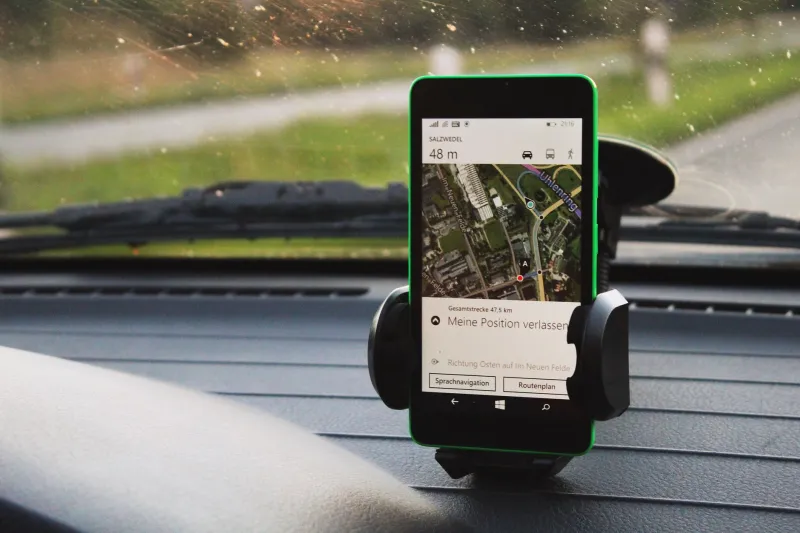
Once You Walk Through the Door, Your GPS Is Basically Useless
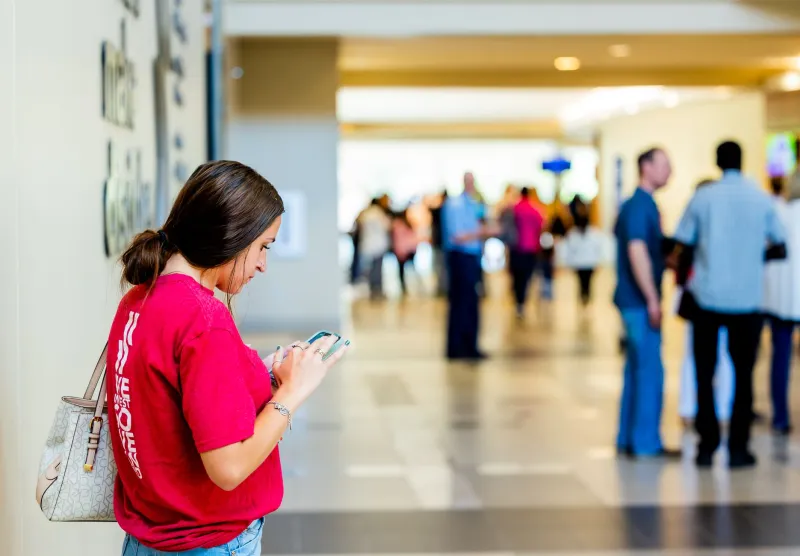
You've done everything right. You pulled up the address, followed every turn, and your app cheerfully announced you'd arrived. Then you walked into the mall, the airport terminal, or the hospital lobby — and suddenly you're on your own. No blue dot. No routing. Just you, a sea of identical hallways, and a vague memory of where Gate C might be.
This isn't a bug. It's a fundamental limitation baked into how GPS actually works. And for millions of Americans navigating large buildings every single day, it's one of the most quietly frustrating tech failures hiding in plain sight.
Why GPS Signals Can't Follow You Inside
GPS relies on signals from a constellation of satellites orbiting roughly 12,500 miles above Earth. Your phone's receiver picks up transmissions from multiple satellites simultaneously and uses the tiny time differences between those signals to calculate your position. It's elegant, and outdoors it works remarkably well.
The problem is physics. Those satellite signals are incredibly weak by the time they reach ground level — we're talking about the equivalent of a 20-watt light bulb seen from 12,500 miles away. Concrete, steel, glass, and even drywall absorb and scatter those signals almost entirely. Once you're inside a multi-story parking structure or an airport terminal with a reinforced roof, your phone's GPS chip is essentially trying to hear a whisper through a concrete wall.
The result? Your location either freezes at the building entrance, drifts around erratically, or disappears from the map entirely. Your app knows you exist somewhere in the general vicinity of 400 Broad Street. It just has no idea you're on Level 3, Section D, near the elevator bank.
The "Last 100 Feet" Problem Nobody Talks About
The navigation industry has spent decades perfecting the outdoor experience. Turn-by-turn directions, real-time traffic, rerouting around accidents — all of it is genuinely impressive. But there's an awkward gap that rarely gets discussed: the moment you transition from a public road to a private, enclosed space.
Think about how often that gap actually affects your day. You're driving to a new hospital for an appointment and have zero idea which entrance to use or where the elevator to radiology is located. You're at O'Hare trying to find your connecting gate after a delay reshuffled everything. You're in a massive outlet mall in New Jersey and can't remember which anchor store your car is parked near.
Outdoor GPS got you to the building. But the building is where the real navigation challenge often begins.
What's Actually Being Used Right Now
A few technologies have stepped into the gap with varying degrees of success.
WiFi Triangulation is probably the most widely deployed indoor positioning method today. Your phone detects the signal strengths from multiple WiFi access points and estimates your position based on how strong each signal is. It's already built into most smartphones and doesn't require any additional hardware. The catch? Accuracy is rough — we're talking 10 to 15 feet on a good day, which sounds fine until you realize that's enough to put you in the wrong store or on the wrong side of a security checkpoint.
Bluetooth Beacons improve on that by placing small, inexpensive transmitters throughout a building at known locations. Your phone picks up these signals and can pinpoint your position much more precisely. Plenty of large retailers and airports have experimented with this, though the infrastructure investment required means adoption has been slow and patchy.
Sensor Fusion is what your phone is quietly doing when GPS drops out — combining accelerometer data, gyroscope readings, and barometric pressure sensors to estimate how far you've walked and in which direction. It's called dead reckoning, and it works surprisingly well for short distances. Walk too far without a signal correction, though, and the errors stack up fast.
Ultra-Wideband: The Technology That Could Actually Change Things
The most promising development in indoor positioning right now is ultra-wideband, or UWB. Unlike WiFi or Bluetooth, UWB uses extremely short radio pulses across a wide frequency spectrum to measure the precise time it takes a signal to travel between devices. The result is positional accuracy measured in centimeters rather than feet.
Apple quietly embedded UWB chips into iPhones starting with the iPhone 11, initially using it for features like AirDrop precision and the Find My network. Android manufacturers followed. The hardware is already in hundreds of millions of pockets across the US.
The missing piece is infrastructure — buildings need UWB anchor points installed for the technology to work as an indoor positioning system. That's where the real race is happening right now. Apple, Google, and a handful of specialized startups are actively courting airports, hospitals, convention centers, and large retail chains to deploy the hardware that would turn those existing UWB-capable phones into precision indoor navigation devices.
Some airports, including a handful of major US hubs, have begun piloting indoor navigation features through their own apps. The experience is still inconsistent, but the direction is clear.
Why Big Tech Is Suddenly Very Interested
Google Maps and Apple Maps have both made moves toward indoor mapping, with floor plans available for select airports, malls, and transit stations. If you've ever seen a building's interior layout appear inside Maps, that's the result of venue operators manually submitting floor plan data. Coverage is improving but still wildly uneven — a major airport in Atlanta might have detailed indoor maps while a similarly sized one in the Midwest has nothing.
The commercial incentive here is enormous. Retail analytics, targeted advertising based on precise location within a store, wayfinding as a paid service for large venues — there's real money in solving indoor positioning. That's part of why the investment is accelerating.
For regular users, though, the motivation is simpler. Nobody wants to feel lost the moment their app stops working.
What You Can Do Right Now
While the industry works toward a real solution, a few practical habits help close the gap.
Download venue-specific apps before you arrive at major airports or large medical campuses — many have invested in their own indoor navigation tools that work independently of Google or Apple Maps. Before entering a large parking structure, drop a pin at your entry point so you have a reference when you come back out. And if you're navigating a hospital or convention center you've never visited, checking their website for a downloadable floor plan still beats wandering around hoping your GPS catches a signal near a skylight.
It's not a perfect workaround. But until UWB infrastructure becomes as common as WiFi, the honest reality is that your navigation app's job ends at the front door.
The good news is that for the first time, the technology to actually fix this problem exists and is already in your pocket. The race now is just about getting it everywhere else.